Background Introduction In a power electronics system, we need to charge and discharge the battery. The total maximum voltage of the system’s battery is 554.4V, and the pre-charging capacitor has a capacitance of 188μF. To effectively control the charging and discharging processes in this RC circuit, it is essential to introduce a pulse resistor.
Application Scenario In this application, the pulse resistor is primarily used to limit the charging current, ensuring that the charging voltage rises gradually to prevent damage to the battery and capacitor. In the RC circuit, the pulse resistor is connected in series with the capacitor, forming the mechanism for charging and discharging.
1. Charging Process: When the system is powered on, the pulse resistor limits the current flowing into the capacitor, avoiding sudden high currents that could damage the capacitor or battery. Over time, the capacitor charges gradually, and the voltage stabilizes and increases.
2. Discharging Process: During the discharging process, the pulse resistor also plays a current-limiting role, ensuring that the discharge occurs smoothly and controllably, preventing circuit shocks caused by sudden discharges.
Importance of the Resistor 1. Component Protection: The pulse resistor effectively controls the current flowing through the circuit, thus protecting the battery and capacitor, reducing the failure rate, and extending the lifespan of the equipment.
2. Voltage Stability: By controlling the charging and discharging rates, the pulse resistor helps maintain the voltage within a safe range, avoiding over-voltage or under-voltage situations.
3. Enhanced System Reliability: The use of a pulse resistor during the charging and discharging of the battery and capacitor makes the electrical performance of the system more stable, improving the overall reliability of the system.
4. Reduction of Electromagnetic Interference: The pulse resistor reduces electromagnetic interference (EMI) by smoothing current changes, enhancing the normal operation of the system, which is particularly important in high-voltage and high-power applications.
Resistance Selection Based on the calculation of the RC time constant, a suitable resistance value for the pulse resistor should be selected. For example, if we choose a 10Ω resistor, it can effectively control the current during the charging and discharging processes.
Power Rating Select a resistor with a power rating sufficient for the charging and discharging power requirements. For instance, if the maximum expected charging current is 10A, the power rating of the resistor should be at least (P = I² × R = 10² × 10 = 1000W).
Monitoring and Protection To ensure the safety of the system, current and voltage sensors can be added to the circuit to monitor the charging and discharging status in real-time. In the case of detecting anomalies, the system can automatically cut off the power or adjust the resistance value to protect the battery and capacitor.
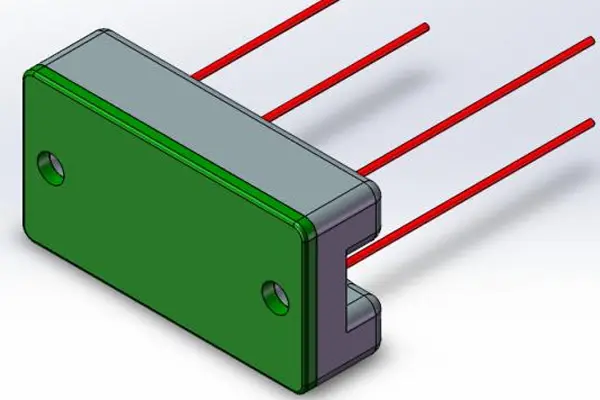
Importance of Pulse Power Resistors 1. Component Protection: The 2*50Ω-10% pulse power resistor plays a critical role in protecting the circuit from high currents that could lead to overheating or failure of the battery and capacitor.
2. Voltage Stability: By controlling the charging and discharging rates, the resistor keeps the voltage within acceptable ranges, ensuring reliable operation of the entire system.
3. Increased System Reliability: With the use of pulse power resistors, fluctuations and disturbances in the circuit are reduced, making the system more robust and reliable.
4. Mitigation of Electromagnetic Interference (EMI): A gradual transition in current helps to reduce associated EMI, allowing for cleaner signal integrity and better performance in sensitive applications.
Conclusion The application of a 2*50Ω-10% pulse power resistor in an RC circuit is fundamental for managing the charging and discharging processes of high-capacity systems. It provides necessary protections, stabilizes voltage levels, and enhances the reliability of power electronic circuits. When designing such systems, selecting appropriately rated pulse power resistors is essential for ensuring safe and effective operation.