In high-power electronic systems, efficient management of energy storage and discharge is critical. The ceramic carbon resistor has emerged as a superior solution for applications requiring precise control over capacitor charging and discharging processes. This technology combines the durability of ceramic materials with the conductivity of carbon, offering unparalleled performance in demanding environments.
This article explores the key features, benefits, and technical specifications of ceramic carbon resistors designed specifically for capacitor charging and discharging applications. By leveraging advanced engineering principles, these resistors ensure reliable operation under extreme conditions, making them ideal for industrial, aerospace, and scientific research applications.
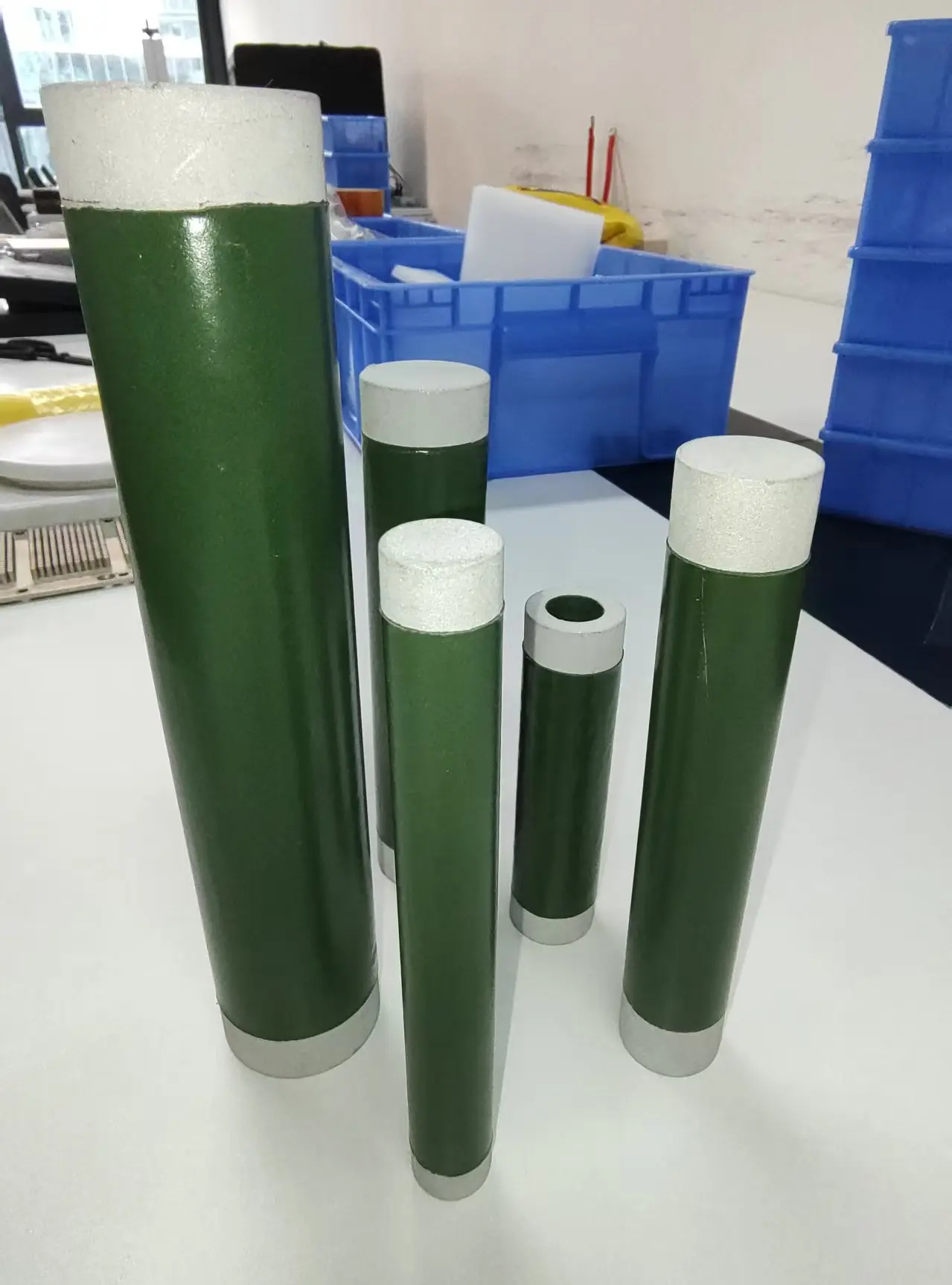 Ceramic Carbon Resistors
Ceramic Carbon Resistors
- High Precision Resistance Values
- R1 (Damping Resistor): Rated at 10 Ω , this resistor ensures optimal damping during capacitor discharge cycles.
- R2 (Discharge Resistor): With a rated resistance of 50 Ω , R2 provides controlled dissipation of stored energy from capacitors C3 and C4.
- Exceptional Thermal Capacity
- Both R1 and R2 are engineered to handle significant thermal loads:
- Thermal Capacity: 25 kJ (equivalent to the total stored energy of capacitors C3 and C4 in series, which is 7.2 kJ).
- This robust thermal design prevents overheating and ensures long-term reliability, even under repeated high-energy discharge cycles.
- Both R1 and R2 are engineered to handle significant thermal loads:
- Material Superiority
- Ceramic Core: Provides excellent insulation properties and mechanical strength.
- Carbon Coating: Enhances electrical conductivity and heat dissipation, ensuring stable performance across a wide range of operating temperatures.
- High Voltage and Current Handling
- R1 (Damping Resistor):
- Peak Voltage: Up to 31 kV between terminals.
- Peak Current: At least 3.1 kA .
- R2 (Discharge Resistor):
- Peak Voltage: Up to 46 kV between terminals and ground.
- Peak Current: At least 0.92 kA .
- These specifications make ceramic carbon resistors suitable for high-voltage and high-current applications, such as testing circuit breakers or managing energy in pulsed power systems.
- R1 (Damping Resistor):
- Application-Specific Design
- R1 (Damping Resistor): Primarily used to dampen oscillations during capacitor discharge, preventing voltage spikes that could damage downstream components.
- R2 (Discharge Resistor): Specifically designed to manage the discharge of capacitors C3 and C4 in series. After the test specimen (e.g., a circuit breaker) is tripped, C4 discharges through R2, leaving only C3’s voltage applied to the test points. Post-test, an external discharge circuit ensures safe dissipation of residual energy from C3.
Technical Specifications
| Parameter | R1 (Damping Resistor) | R2 (Discharge Resistor) |
|---|---|---|
| Rated Resistance Value | 10 Ω | 50 Ω |
| Thermal Capacity | 25 kJ | 25 kJ |
| Type | Ceramic Resistor | Ceramic Resistor |
| Peak Voltage (Between Terminals) | 31 kV | 46 kV |
| Peak Voltage (To Ground) | 152 kV | N/A |
| Minimum Peak Current | ≥ 3.1 kA | ≥ 0.92 kA |
Benefits of Using Ceramic Carbon Resistors
- Enhanced Safety:
- The ability to handle high voltages and currents ensures safe operation in hazardous environments.
- Precise control over discharge rates minimizes the risk of component failure due to voltage spikes.
- Durability:
- Ceramic materials provide excellent resistance to environmental factors such as moisture, temperature fluctuations, and mechanical stress.
- The carbon coating enhances conductivity and thermal stability, extending the lifespan of the resistors.
- Efficiency:
- Controlled energy dissipation reduces wasted power and improves overall system efficiency.
- The precise resistance values allow for tailored solutions to meet specific application requirements.
- Versatility:
- Suitable for a wide range of applications, including pulsed power systems, high-voltage testing, and energy storage management.
- Compatible with various capacitor configurations, ensuring flexibility in design and implementation.
 Ceramic Carbon Resistors
Application Example: High-Voltage Circuit Breaker Testing
In high-voltage circuit breaker testing, ceramic carbon resistors play a crucial role in managing the discharge of capacitors C3 and C4. During the test:
- Initial Setup: Capacitors C3 and C4 are charged to a high voltage level.
- Test Execution: When the circuit breaker is tripped, C4 discharges through R2, while C3 remains energized, applying its voltage to the test points.
- Post-Test Discharge: An external discharge circuit is used to safely dissipate any remaining energy from C3, ensuring complete de-energization of the system.
This process demonstrates the importance of using high-performance resistors like ceramic carbon types to maintain safety and accuracy in critical testing scenarios.
Conclusion
Ceramic carbon resistors represent a cutting-edge solution for managing capacitor charging and discharging processes. Their exceptional thermal capacity, high voltage and current handling capabilities, and precise resistance values make them indispensable in demanding applications. Whether in industrial testing, aerospace systems, or scientific research, these resistors offer unmatched reliability and performance.
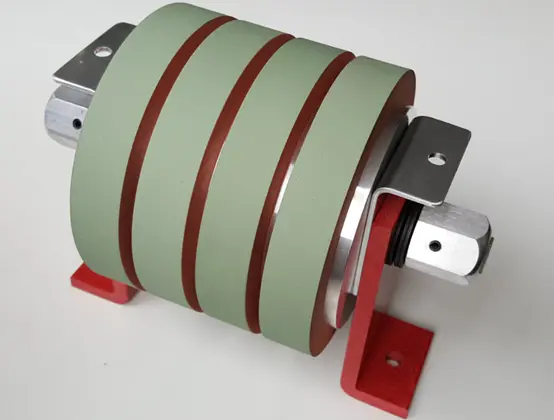 Ceramic Carbon Resistors
By choosing ceramic carbon resistors, engineers can ensure their systems operate efficiently, safely, and reliably, even under extreme conditions. For more information or to discuss custom solutions, contact our experts today.
Call to Action
Ready to enhance your system’s performance? Contact us now to learn how ceramic carbon resistors can optimize your capacitor charging and discharging applications. Visit our website or call us to speak with one of our specialists.