
Instrument transformers are the quiet guardians of every grid. They step lethal voltages down to safe, measurable levels so relays, meters and merging units can keep the power flowing. Inside these rugged assemblies, however, a tiny component is doing the really heavy lifting: the instrument-transformer dedicated thick-film high-voltage resistor.
Below we break down, in plain English, why this specialized resistor is different from general-purpose parts and what every design engineer should look for when Google leads them to “instrument transformer thick-film high-voltage resistor”.
1. True High-Voltage Capability, Not Marketing Hype
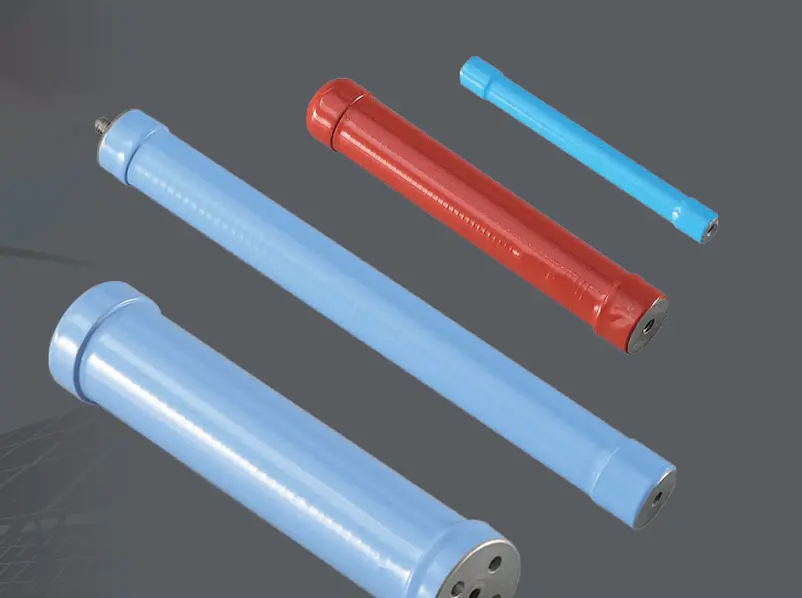
Search any BOM and you will see resistors boasting “5 kV”. For divider or loading duties inside an instrument transformer that is rarely enough. A purpose-built thick-film resistor delivers continuous working voltages up to 90 kV DC and withstands 120 kV impulse without flash-over. The secret is a 96 % alumina ceramic rod, precision-laser-trimmed thick-film pattern and a helical length that spreads electrical stress evenly. Result: no partial discharge at < 10 pC, even after 1 000 h at 175 °C.
2. Non-Inductive = Better Transient Response
Wire-wound resistors add micro-henries that ring when a 50 kV lightning surge slams the primary. Thick-film patterns are planar and bifurcated, keeping typical inductance below 80 nH. The divider inside your transformer therefore tracks abrupt changes in < 1 µs, giving protective relays the speed they need to clear faults.
3. Ratio Stability Over Temperature
Outdoor CTs and CVTs see –40 °C nights and + 125 °C days. A high-grade thick-film resistor offers TCR down to ± 25 ppm/°C (–40 °C … + 105 °C) and ratio drift < 0.1 % over the whole span. That accuracy eliminates seasonal recalibration trips, cutting utility OPEX.
4. Pulse-Proof for Network Faults
During a close-in fault, energy rushes into the burden. A standard chip part may shift 5 %. A pulse-qualified thick-film resistor survives 10 kJ single-shot overloads or 5× rated power for 5 s with ΔR < 0.2 %. Your instrument transformer keeps its accuracy class (0.2 S, 0.5 P, 5P20) even after the event.
5. 30-Year Life in Humid Environments
Silicone coating plus a nickel barrier cap raises insulation resistance above 10 GΩ and passes 56-day 95 % RH, 40 °C bias with < 0.4 % shift. Whether the unit sits in coastal Vietnam or a Canadian substation, corrosion will not alter the divider ratio.
6. Compact, One-Piece Assembly
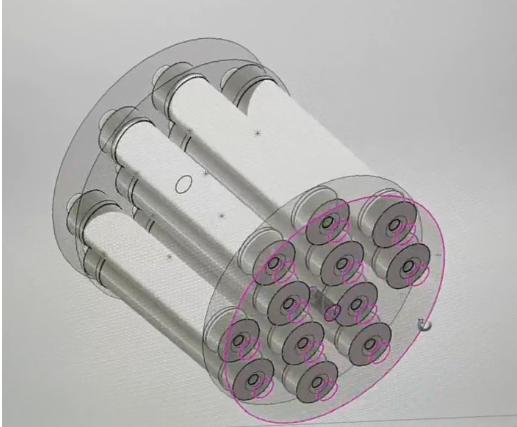
Replacing a stacked series of low-voltage chips with a single cylindrical thick-film resistor shrinks board space by 60 %, removes solder joints and improves vibration withstand (MIL-STD-202, 20 g). For engineers fighting for room inside a live-tank CT head, that is a free mechanical redesign.
7. Fully Customisable Without NRE
Need 137 MΩ ± 0.1 % with 1 000 : 1 tap? Or 21 mm diameter to fit an existing epoxy cone? Thick-film technology is printed, so prototypes ship in days and hard-tooling cost is zero. You can even mix different resistance pastes on the same ceramic to create built-in high- and low-voltage legs, removing a manual assembly step.
How to Choose the Right Spec
Define continuous voltage first; pick a resistor rated for ≥ 120 % of your primary voltage.
Check the accuracy class you must maintain (0.1 %, 0.2 %, 0.5 %) and select tolerance + TCR accordingly.
Calculate worst-case energy (½ C V² or I²t) during a fault; verify the component’s single-pulse rating exceeds it.
Specify terminal style: axial leads for PCB, M4/M8 threaded studs for metalwork, or flying leads for oil-immersed tanks.
Ask for 1 000 h load-life and partial-discharge test data; reputable vendors supply both free.
Key Takeaway
An instrument transformer is only as good as its divider. By swapping generic parts for a dedicated thick-film high-voltage resistor engineered for the job, you gain accuracy, shrink size and harden the network against surges—without blowing the budget.
Ready to upgrade your next CT, CVT or EVT? Start by requesting a sample with the exact ratio, voltage and TCR your specification demands, and test it under real surge and temperature stress. The results will speak louder than any datasheet.