
In the field of electrical power systems, the closing resistor plays a vital and often underestimated role in ensuring the smooth operation and protection of circuit breakers. Among the various types of closing resistors available, the porous silicon carbide ceramic resistor has emerged as a superior option, offering a multitude of benefits that make it highly desirable for use in circuit breaker applications.
Exceptional Thermal Shock Resistance and Stability
The porous silicon carbide ceramic resistor boasts remarkable thermal shock resistance and thermal stability. The unique material composition of silicon carbide gives it the ability to withstand rapid and extreme temperature changes without degradation or failure. During the closing operation of a circuit breaker, a significant amount of heat is generated. The silicon carbide ceramic resistor can endure these temperature fluctuations, maintaining its structural integrity and continuing to function effectively. This thermal stability ensures reliable performance even under the most demanding operating conditions.
High Heat Capacity and Energy Absorption
With its high heat capacity, the porous silicon carbide ceramic resistor is capable of absorbing substantial amounts of energy. When a circuit breaker closes, the resistor needs to absorb electrical energy and dissipate it as heat to suppress closing overvoltages. The excellent energy absorption characteristics of the silicon carbide ceramic resistor make it highly effective in this regard. It can efficiently absorb and dissipate the energy generated during the closing process, preventing excessive voltage levels that could potentially damage electrical equipment and ensuring the stability and safety of the power system.
Voltage Resistance and Inductance-free Operation
The porous silicon carbide ceramic resistor is an insulator with no inductance, which is a significant advantage in circuit breaker closing resistor applications. Unlike some other types of resistors, it avoids the problem of slow current rise caused by inductance. This allows the resistor to respond quickly and accurately to limit closing overvoltages. Additionally, its excellent voltage resistance properties make it well-suited for use in high-voltage environments, ensuring reliable performance in ultra-high and extra-high voltage power transmission systems.
Excellent Conductivity and Uniformity
The porous silicon carbide ceramic resistor exhibits outstanding conductivity and uniformity. The carbon in the resistor serves as the conductive material, and its stable physical and chemical properties are essential for maintaining consistent performance. Through specialized manufacturing processes, such as filling conductive carbon materials into a porous ceramic support with a multi-level pore structure to form a continuous carbon conductive layer, the resistor achieves uniform distribution and continuous connectivity of the conductive carbon material within the ceramic matrix. This results in a three-dimensional conductive network structure, ensuring stable and uniform conductivity. The resistor provides a stable resistance value during the closing process, effectively suppressing overvoltages.
High Compressive Strength and Reliability
The porous silicon carbide ceramic resistor possesses high volumetric density and compressive strength. For instance, related technologies indicate that carbon ceramic resistors with continuous conductive layers have a product volumetric density of ≥2.20g/cm³ and a compressive strength of ≥130MPa. This high strength enables the resistor to withstand mechanical stresses in complex power system environments without cracking or damage, enhancing its reliability and service life. This reduces the frequency of maintenance and replacement, providing long-term and dependable performance in circuit breaker applications.
Customizable Shape and Size
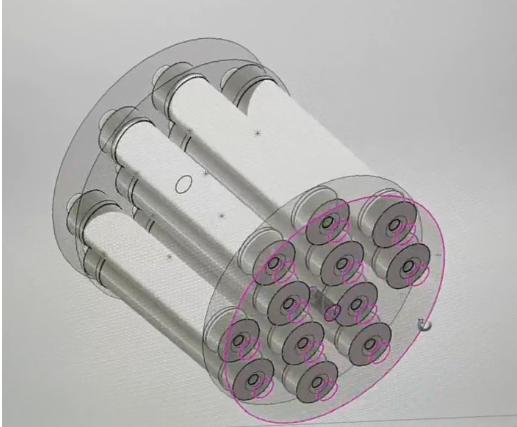
The porous silicon carbide ceramic resistor can be manufactured in various shapes and sizes according to customer requirements. This flexibility allows it to better adapt to the installation space requirements of different types and models of circuit breaker closing resistors. Whether it’s a compact or standard-sized circuit breaker, the resistor can be customized to fit perfectly, ensuring optimal performance and integration.
Chemical Inertness and Stability
The porous silicon carbide ceramic resistor is composed of inorganic materials, exhibiting chemical inertness and thermal stability. During long-term operation, it is resistant to chemical changes and performance degradation. This stability ensures consistent performance over time, even in harsh environmental conditions, providing reliable protection for circuit breakers.
In summary, the porous silicon carbide ceramic resistor offers a range of advantages that make it an ideal choice for circuit breaker closing resistor applications. Its exceptional thermal shock resistance, high heat capacity, voltage resistance, excellent conductivity, high compressive strength, customizable shape and size, and chemical inertness all contribute to its superior performance. These qualities not only enhance the reliability and safety of circuit breakers but also improve the overall stability and efficiency of power systems. As the demand for high-performance electrical components continues to grow, the porous silicon carbide ceramic resistor is poised to play an increasingly important role in the future of electrical power systems.