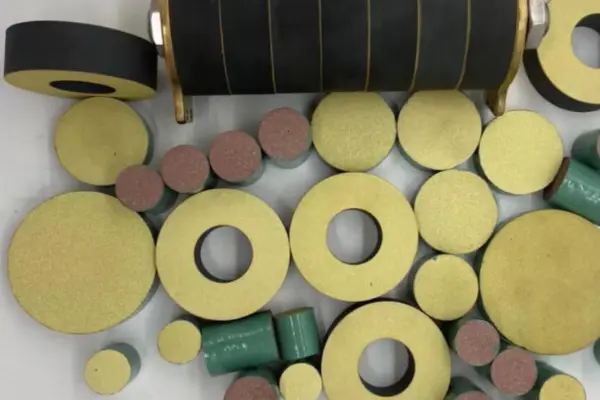

In our exploration of high energy pulse resistors, we find that ceramic carbon solutions embody a sophisticated blend of design and functionality that is particularly crucial in high voltage applications. The construction of these resistors often involves a composite of ceramic materials and carbon elements, which not only enhances their thermal stability but also optimizes their resistance to electrical pulse stress. As we delve deeper into this subject, it is imperative to note that the arrangement of carbon particles within the ceramic matrix plays a pivotal role in determining the resistive properties and overall efficiency.
A distinctive characteristic of our ceramic carbon resistors is their ability to dissipate heat rapidly, which is essential for maintaining performance under extreme voltage conditions. The intricacies in the design—such as varying thickness, surface area, and the doping methods employed—facilitate tailored resistance values suitable for specific applications.
Furthermore, the mechanical resilience exhibited by these resistors ensures their longevity in demanding environments where traditional resistor solutions might falter. Our comprehensive analysis indicates that these attributes render ceramic carbon resistors indispensable components across various industries.
As we venture into practical applications, one can observe that innovative designs not only meet industry standards but often exceed them, paving the way for advancements in electrical systems. Our commitment to understanding these nuances allows us to provide solutions that enhance reliability while mitigating risks associated with pulse voltage surges.
“Optimizing heat dissipation is as crucial as selecting appropriate materials when designing high-energy pulse resistors.”
This insight underscores our approach toward developing robust electronic components capable of delivering consistent performance under pressure.
| Design Feature | Impact on Performance |
|---|---|
| Material Composition | Enhances thermal stability |
| Carbon Doping | Tailors resistance values |
| Surface Area Variation | Improves heat dissipation efficiency |
| Thickness Optimization | Increases mechanical resilience |
In essence, our ongoing research into ceramic carbon resistor technology highlights pivotal advancements in both understanding and harnessing their potential within high voltage scenarios.
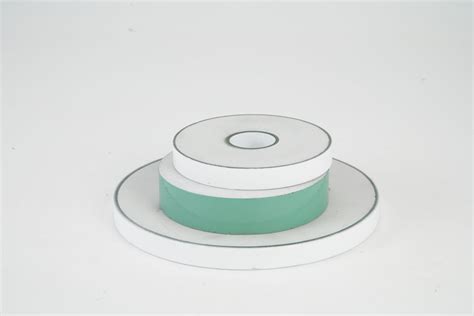
Advantages of High Energy Pulse Resistors in High Voltage Applications
In our exploration of high energy pulse resistors, we find that their unique characteristics render them exceptionally advantageous for high voltage applications. These robust components are engineered to withstand extreme electrical stress and thermal transient conditions, making them indispensable in circuits that necessitate rapid charge and discharge cycles. The inherent design of ceramic carbon solutions provides an optimal balance of electrical conductivity and thermal stability, ensuring that we can achieve superior reliability even under demanding operational scenarios. Furthermore, the longevity we experience in applications utilizing these resistors is noteworthy; their ability to manage electric pulses while minimizing degradation over time is particularly beneficial for high-voltage power systems where performance consistency is paramount. This reliability not only extends the lifespan of our entire circuit design but also reduces maintenance costs, which is critical in industrial settings where downtime can lead to significant financial losses. Additionally, high energy pulse resistors are equipped with the capacity to dissipate excess heat efficiently, a property that mitigates the risk of thermal runaway - a common concern in high voltage environments. Ultimately, our deployment of high energy pulse resistors signifies a robust enhancement to the resilience and efficiency of intricate electrical systems, affirming their role as a cornerstone in modern engineering advancements focused on safety and performance excellence.
Comparative Analysis of Ceramic Carbon Resistors with Traditional Solutions
In our exploration of the comparative advantages of ceramic carbon resistors over traditional resistor technologies, we delve into various parameters that define their performance. The robustness of ceramic carbon resistors stems from their unique composition, which integrates high ceramic content, enhancing thermal stability and dielectric strength significantly. Unlike traditional metal film or wire-wound resistors, which can exhibit performance degradation under high energy impulses or in volatile environments, our ceramic carbon solutions maintain superior integrity.
Moreover, the operational metrics reveal that these advanced resistors demonstrate improved consistency in resistance values across a spectrum of temperatures and frequencies. This stability is particularly vital in applications where precision is paramount. We observe that the self-heating characteristic of ceramic carbon resistors is minimized due to their efficient heat dissipation properties, a critical advantage in high-energy situations.
Addressing lifecycle reliability, our analysis indicates that ceramic carbon technology endures extensive use without compromising performance. This durability not only extends the service life of electronic components but also reduces maintenance costs associated with traditional resistor solutions. Additionally, we recognize that the non-inductive design found in many ceramic carbon configurations facilitates high-frequency response without leading to phase shifts that can occur with conventional wire-wound designs.
Therefore, when considering the evolving demands of electronic circuitry and power systems, it becomes evident that ceramic carbon resistors are not merely an alternative but represent a significant enhancement over traditional implementations. Our commitment to understanding these comparative benefits allows us to position our innovations strategically within next-generation electrical applications, thereby meeting and exceeding industry expectations for reliability and performance under rigorous conditions.
Innovative Applications of Ceramic Carbon Resistors in Demanding Electrical Environments
In our exploration of the innovative applications of ceramic carbon resistors, we uncover their significant roles in demanding electrical environments characterized by high voltage and extreme conditions. These resistors, with their unique composition and design, exhibit exceptional thermal stability and robustness that allow them to withstand the rigorous demands of various industrial applications. One notable application is found in energy conversion systems where precise control over electrical parameters is paramount. Here, the resilience of ceramic carbon resistors enables them to function effectively even under rapid fluctuation scenarios, thereby ensuring uninterrupted operational integrity. Additionally, we recognize the pivotal role these components play in pulse power applications, where rapid energy discharges can otherwise jeopardize system reliability. By integrating ceramic carbon resistors into such systems, we enhance their performance capabilities and prolong their operational lifespan. Furthermore, the inherent characteristics of these resistors facilitate miniaturization and improved thermal management in circuit designs that require a compact footprint without sacrificing reliability. Our continual evaluation of these innovative solutions highlights not only their adaptability but also their essential contributions to advancing technology within high-performance domains. As we push the boundaries of what is possible in electrical engineering, the versatility and dependability of ceramic carbon resistors will undoubtedly remain at the forefront of our endeavors in overcoming engineering challenges.